
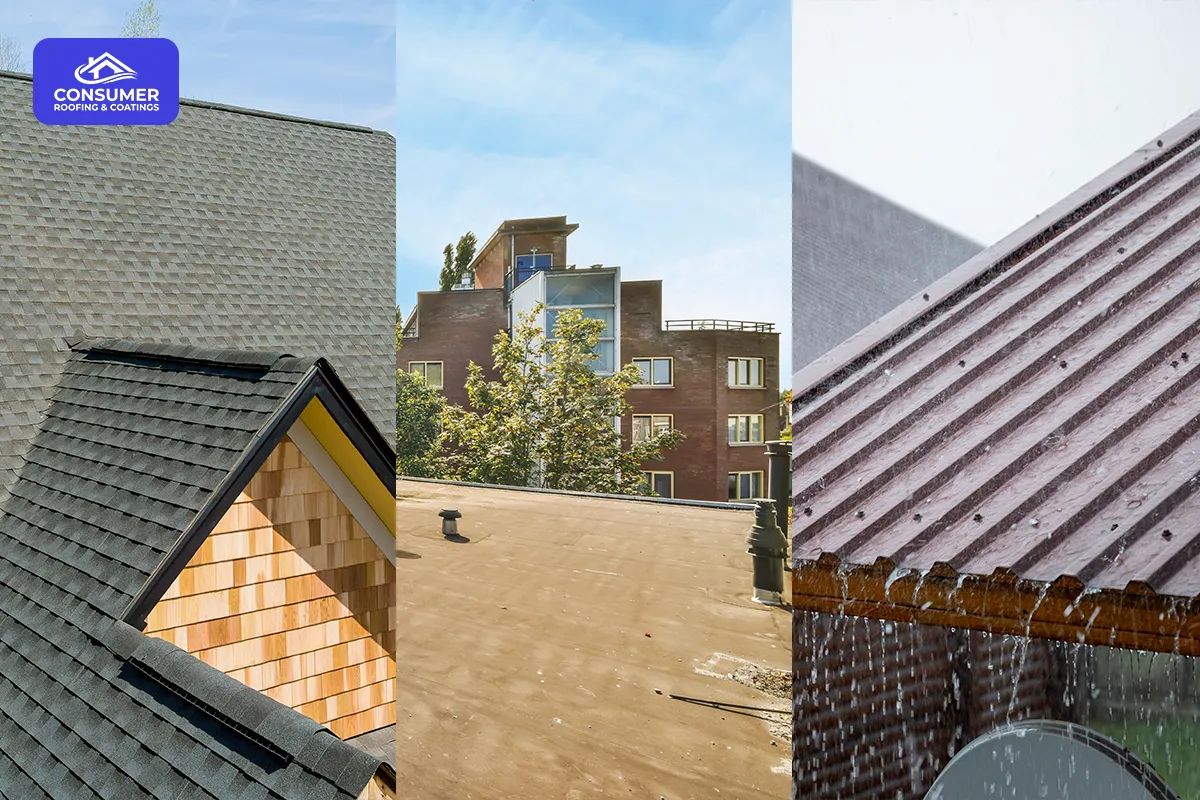
Shingle, Flat, or Metal Roof in Ontario? An Honest Breakdown of the Pros, Cons, & What to Choose
When it is time to replace or install a roof in London, Southwestern Ontario, or anywhere that gets a genuine Canadian winter, the material decision is one of the most consequential calls you will make about your property.
Not because roofing is complicated in theory. The complication is practical: the wrong material for your building type, slope, and situation costs you in ways that do not show up until the third or fourth winter. By then you are dealing with ice dams, leaks, or an early replacement that was never in the budget.
75% of Canadian residential roofs are asphalt shingles. Metal roofing adoption in Ontario has grown by 40% over the last decade as homeowners weigh long-term cost against upfront savings.
If you are about to make a decision in the $10,000 to $30,000 range, it is worth reading before you call anyone.
Why Material Choice Matters More in Ontario Than Almost Anywhere Else
Roofing materials are tested and rated in controlled laboratory conditions. The numbers on a spec sheet reflect performance under average North American climate assumptions. Ontario's climate is not average.
London and Southwestern Ontario deliver a particular combination of stressors that accelerates deterioration on poorly matched systems. Deep freeze periods are followed by mid-winter thaw events within the same week. Ice accumulates at roof edges and valleys. Summer UV intensity rivals climates far warmer than ours. Each of these alone would be manageable; together, they separate a well-matched roofing system from an expensive mistake.
In February 2025, CBC News reported that London roofers were fielding more than ten calls per day about ice dam damage. Water was entering homes after a week of frozen temperatures broke into an abrupt warm spell. That is not a freak event. It is a pattern that repeats most winters in this region, and the roofing system you choose either accounts for it or it does not.
The right material for your specific building matters here more than in a milder climate. Getting that call wrong does not just affect comfort. It affects your wallet in ways that compound over years.
Asphalt Shingle Roofing: The Ontario Standard and Why
Asphalt shingles are the most common residential roofing material in Canada because they hit a genuinely good balance of upfront cost, visual flexibility, and performance on sloped residential roofs. For the right building they are an excellent choice. For the wrong one, they are a frequent source of premature problems.
What You Are Actually Getting
A modern asphalt shingle is a fibreglass mat core saturated with asphalt and coated with mineral granules. The granules protect the asphalt from UV degradation. The asphalt provides waterproofing and the flexibility to survive temperature changes. The fibreglass core provides dimensional stability. Higher-grade architectural shingles add thickness and a dimensional profile that sheds water more effectively and looks substantially better on the finished roof.
In Ontario, architectural (laminated) shingles are the minimum worth installing on any property you plan to keep for more than a decade. Three-tab shingles are cheaper upfront and functionally obsolete. They perform poorly under wind load and age significantly faster in freeze-thaw climates.
What Works in Their Favour
The lowest installed cost of the three systems: $8,000 to $15,000 for most residential roofs.
The widest range of colours, profiles, and aesthetics; they match virtually any architectural style.
Widely understood by all local contractors, which keeps pricing competitive and turnaround times fast.
Good performance on steep-slope residential roofs when properly installed with the right underlayment and ventilation.
Individual shingles can be replaced without disturbing the full system, keeping repair costs low.
They qualify for most manufacturer warranty programs when installed by certified contractors.
Familiar to home inspectors and buyers; there is no hesitation during real estate transactions.
Where They Fall Short
The shortest lifespan of the three materials: 15 to 25 years in Ontario conditions, well below the 20 to 30 year label rating.
The most vulnerable system to ice dam damage; proper ice-and-water shield and attic ventilation are non-negotiable, not optional.
Oil depletion over time causes brittleness, granule loss, and cracking, often before the roof reaches replacement age.
End-of-life disposal is a significant waste problem; shingles go to landfill in most Ontario municipalities.
Not suitable for low-slope or flat applications; most systems require a minimum pitch of 4:12.
Wind resistance on lower-grade products is poor; shingle loss in significant storms is common.
Granule loss accelerates UV damage in a self-reinforcing cycle that is difficult to reverse once started.
Flat Roofing: The Correct System for Low-Slope Applications, When Installed Properly
Flat roofing is not actually flat. A functional flat roof has a minimum slope of one quarter inch per foot: enough to direct water toward drains and prevent ponding. What makes it flat is that the slope is too shallow for shingles, which requires a continuous membrane system instead of overlapping panels.
In London and Southwestern Ontario, flat roofing is the system of choice for commercial properties, additions, porches, low-slope residential sections, and multi-unit buildings. It is not an inferior option. It is the correct option for these applications, and it performs extremely well when properly specified and installed.
The reputation problem flat roofing has in this region comes almost entirely from poor installation: inadequate slope, blocked drains, membrane seams that were not sealed correctly, or systems installed without proper insulation for Ontario's freeze-thaw demands. None of those are problems with the material. They are problems with the contractor.
The Three Main Systems Used in Ontario
TPO (Thermoplastic Polyolefin) is the most common flat roofing membrane installed today. It is white or light grey with heat-welded seams, good UV and weather resistance, and a typical lifespan of 20 to 30 years. Its high solar reflectance makes it the most energy-efficient option for commercial buildings in summer.
Modified Bitumen is a more traditional approach using asphalt-based sheets applied with heat or cold adhesive. Two-ply systems provide excellent durability and a well-established performance record in Canadian climates. Typical lifespan is 15 to 25 years.
EPDM (Ethylene Propylene Diene Monomer) is a rubber-based membrane, typically black, with one of the longest cold-climate track records of any flat roofing system. Highly flexible through freeze-thaw cycling, it is among the better performers in Ontario winters, with a typical lifespan of 20 to 30 years when properly maintained.
What Works in Their Favour
The only appropriate system for low-slope applications below 4:12 pitch; shingles are not a structural option below that threshold.
Multiple membrane choices allow matching the system precisely to the building type, exposure, and use.
EPDM and TPO both perform well through freeze-thaw cycling when installed with correct drainage.
TPO's white surface reflects solar heat, producing measurable energy savings on commercial buildings in summer.
Flat roofs accommodate HVAC equipment, mechanical systems, and rooftop use in ways sloped roofs cannot.
Seam failures are localised and repairable without requiring full tear-off in most cases.
Modern membranes perform reliably for 20 to 30 years when properly maintained and drained.
Where They Fall Short
Drainage is not optional; it is the entire system. Poor slope or blocked drains mean ponding, which destroys membranes faster than anything else.
Higher maintenance requirements than shingles or metal: drain inspection, seam checks, and surface debris removal are needed each season.
Ontario winters create specific risks at drains, where ice accumulation and freeze-thaw stress on poorly adhered seams can cause failure.
Specialist contractors are required; not all residential roofers are qualified for flat membrane systems.
Higher installed cost than shingles for equivalent area: $10,000 to $20,000 or more depending on system and size.
UV degradation on black EPDM is a factor; surface coatings add cost but meaningfully extend lifespan.
Active leaks on flat roofs are harder to trace to a source than on sloped systems; diagnosis requires experience.
Metal Roofing: The Highest Upfront Cost, the Lowest Lifetime Cost
In Ontario, a properly installed metal roof typically lasts 40 to 70+ years: two to three times longer than asphalt shingles on the same building.
Metal roofing has a perception problem among some Ontario homeowners. It sounds industrial. It costs more upfront. The mental image is a corrugated barn roof. None of that reflects what modern residential and commercial metal roofing actually is.
Standing seam steel and aluminum panel systems look architecturally impressive on residential homes and perform better in Ontario's specific climate than any other material available. The case for metal is not aesthetic, though. It is mathematical. A metal roof installed correctly in London will likely still be performing when the home changes hands a second or third time.
Steel vs. Aluminum: Choosing the Right Metal
Steel is the more common choice in Southwestern Ontario: more economical, widely available, with excellent structural rigidity and well-suited to standing seam systems. It requires a factory-applied coating, typically Kynar 500 or equivalent, to prevent oxidation. When that coating is properly maintained, steel roofing performs for 40 to 60 years in Ontario conditions.
Aluminum is the better choice for properties with high salt exposure, coastal properties, or heavily salted rural roads, or where weight is a significant structural consideration. It costs more per panel but is naturally corrosion-resistant without requiring a protective coating. A lifespan of 50 to 70 years is typical for a well-installed aluminum system.
What Works in Their Favour
The longest lifespan of any roofing system available: 40 to 70 years or more in Ontario conditions.
Excellent performance in freeze-thaw cycles; metal expands and contracts without cracking or delaminating.
Snow sheds naturally from metal surfaces, which significantly reduces ice dam risk compared to shingles.
The lowest lifetime maintenance cost of the three systems: no granule loss, no oil depletion, no individual component failure.
100% recyclable at end of life; no landfill contribution.
Strong wind resistance; standing seam systems are rated to 140 mph or more in most specifications.
Light-coloured and Kynar-coated metals reflect solar radiation, reducing cooling load and energy costs.
Adds measurable resale value, increasingly recognized by buyers and appraisers in this region.
Where They Fall Short
The highest upfront installation cost of the three: $15,000 to $30,000 or more for residential, depending on system and size.
Requires specialist installation; not all roofers are qualified for standing seam systems.
Thermal expansion requires correctly designed fastening systems; improper installation causes noise and panel damage.
Rain noise is a real factor without proper insulation between panel and deck; manageable with the right assembly but worth knowing.
Dents from hail are possible on aluminum systems; steel is more resistant.
Repainting or recoating may be required at 20 to 25 year intervals on steel systems to maintain warranty coverage.
The upfront cost may not make financial sense for homeowners planning to sell within five to seven years.
Shingle vs. Flat vs. Metal: The Honest Side-by-Side
Rather than a table, here is what the comparison actually looks like in plain terms for the factors that drive decisions in Ontario.
Lifespan
Metal wins outright: 40 to 70 years under Ontario conditions. Flat membranes deliver 15 to 30 years depending on the system and how well the drainage is maintained. Asphalt shingles are rated at 20 to 30 years but routinely reach the end of useful life at 15 to 25 years in this climate because of freeze-thaw oil depletion.
Upfront Cost
Shingles are the most accessible: $8,000 to $15,000 installed for most residential homes. Flat roofing runs $10,000 to $20,000 or more depending on membrane type, insulation requirements, and whether you are doing a full tear-off or a re-cover. Metal is $15,000 to $30,000 or more, reflecting higher material costs and the specialist labour required for proper installation.
Maintenance Demands
Metal is the lowest-maintenance system in the long run: no seasonal inspection requirements beyond a visual check after severe weather. Shingles are moderate; occasional spot repairs and gutter clearing are part of the picture. Flat roofing is the most maintenance-intensive of the three, specifically because of its drainage dependence. Skip the fall drain inspection and you may pay for it in February.
Ontario Winter Performance
Metal performs best in this climate. Its snow-shedding surface and tolerance for dimensional cycling under temperature stress give it a clear advantage. Shingles can perform well when the full system is installed correctly, including ice shield and ventilation, but they carry meaningful ice dam risk when those elements are absent or undersized. Flat roofing is fine in winter when drainage is maintained and the membrane was installed correctly; it is the system most often damaged when those conditions are not met.
Environmental Impact
Metal is the only system that is 100% recyclable at end of life. Asphalt shingles are the largest contributor to roofing landfill waste in Canada; the Athena Sustainable Materials Institute estimates 1.25 million tonnes of asphalt-based roofing material enters Canadian landfills annually, most of it from premature replacements. Flat membranes are not easily recycled in most Ontario municipalities, but their longer lifespan relative to shingles means a lower cumulative replacement volume over 40 years of building ownership.
Who It Is Actually For
Shingles: standard-pitch residential homes, budgets under $15,000, ownership horizons of 10 to 20 years, and homeowners planning to sell. Flat membranes: any building with a slope below 4:12, commercial properties, multi-unit buildings, and any structure where the flat designation is driven by the architecture rather than preference.
Metal: long-term residential ownership, commercial and investment properties where lifetime cost is the metric, and any roof with a documented ice dam history where the shingle system has already failed.
No comparison of numbers captures the installation quality variable. In Ontario roofing, a metal roof installed by a crew unfamiliar with standing seam systems will underperform a shingle roof installed by someone who has done it correctly for 30 years. The contractor you choose is as important as the material they install.
How to Actually Choose: Four Questions Worth Answering Before You Call Anyone
Most homeowners come to a roofing decision having already formed an opinion based on what their neighbours chose or what a contractor quoted over the phone. Working through these four questions first tends to produce a clearer, cheaper outcome.
What Is the Pitch of Your Roof?
This is the one question that removes options entirely. A pitch below 4:12 makes shingles structurally inappropriate, not just suboptimal. Water does not move across a shallow slope quickly enough for overlapping panels to drain properly. If your roof is below that threshold, the decision is already made: membrane roofing is the only path.
If your pitch is 4:12 or steeper, all three systems are technically available. The decision moves to budget, lifespan goals, and building use.
How Long Do You Plan to Own the Property?
This question drives the financial logic of the metal premium. On a 30-year ownership horizon, a metal roof at $25,000 is almost certainly cheaper than two shingle replacements at $12,000 each. The math tips in favour of metal once your ownership intention exceeds roughly 20 years.
If you are planning to sell within five to seven years, shingles offer better value: lower upfront cost, familiar to buyers, and a new installation will clear a home inspection comfortably for over a decade.
What Is the Building Used For?
Commercial and multi-unit residential properties should default to flat roofing for low-slope sections and metal for sloped elements where the budget permits. The maintenance requirements of commercial flat roofing are manageable in a property management context in a way that may not suit a homeowner who is not expecting a seasonal checklist.
Standard-pitch residential homes in London and Oxford County are the natural environment for shingle roofing. Metal is the appropriate upgrade path for homeowners who have already experienced shingle-related ice dam problems or who want the best available system and plan to stay long enough for the cost to make sense.
What Has Your Roof Failed From Before?
If you have dealt with ice dam damage on a shingle roof, the honest recommendation is to consider metal for the replacement. At minimum, the next shingle installation must include a full ice-and-water shield, upgraded underlayment, and a verified attic ventilation assessment before the new shingles go on.
If you have had flat roof leaks from drainage failures, the issue almost always traces to the installation or the maintenance routine rather than the membrane itself. The right response is a new installation with corrected slope and drain positioning, not a switch to a different material.
The Rule of Thumb Worth Keeping
Match your roofing system to your building’s slope, ownership timeline, and budget rather than current trends. For low-slope or flat roofs, membrane roofing is the mandatory standard. If you own a sloped residential property and plan to sell within ten years, a high-quality shingle installation with proper ventilation and ice shields is your best value. However, for long-term ownership, recurring ice dam issues, or a need for peak performance, metal roofing is the superior investment.
With 45 years of experience in the Ontario climate and an A+ BBB accreditation, Consumer Roofing provides honest, unbiased advice because we install all three systems. We serve London, Oxford, Norfolk, Middlesex, and Waterloo, offering property managers and homeowners a free, straight-answer assessment of what their building actually needs before any commitment is made.
The Bottom Line
The right roofing material depends on your building’s slope, budget, and performance needs in Ontario’s climate. Asphalt shingles are the practical choice for standard-pitch homes with a 10–20 year horizon, while flat roofing is the mandatory, reliable solution for low-slope structures when installed by specialists. For those seeking a lifetime investment, metal roofing offers the highest durability and lowest maintenance against harsh winters.
With 45 years of experience across London and Southwestern Ontario, Consumer Roofing installs all three systems. For an unbiased recommendation tailored to your specific needs, contact us for a free assessment.
